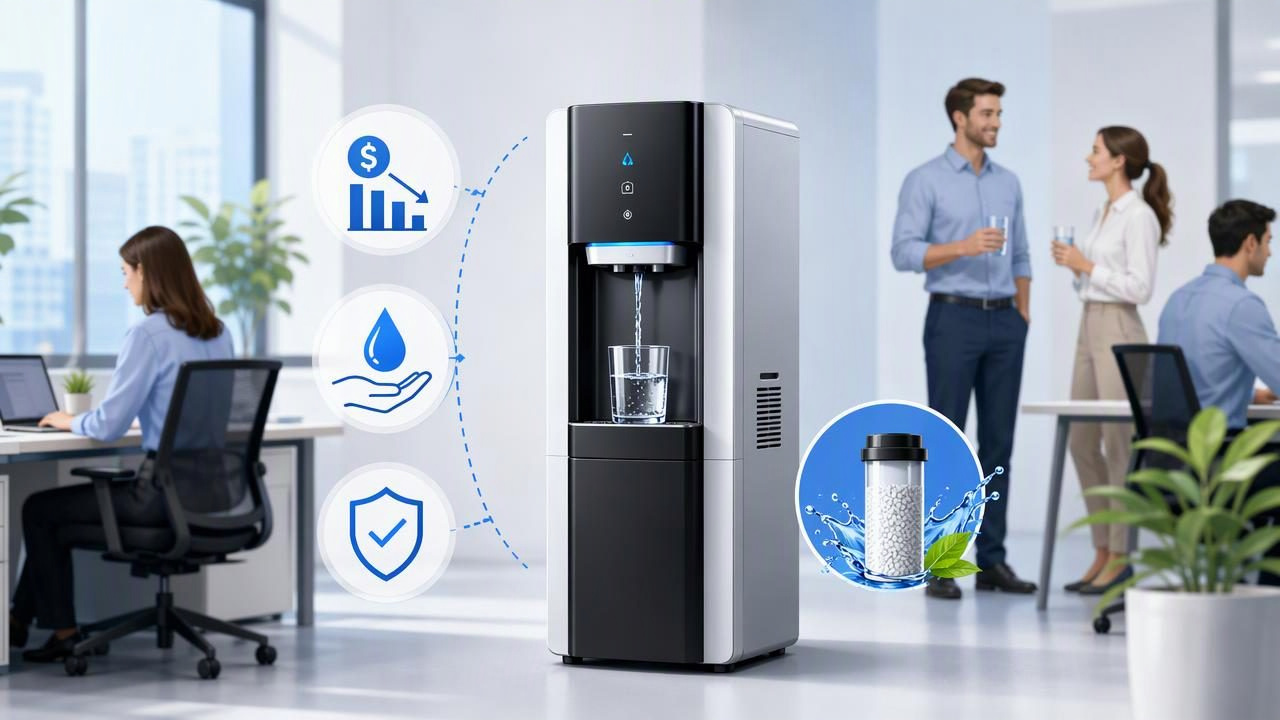
A bottleless water cooler for office use can be a practical way to provide employees, visitors, and clients with fresh drinking water without the recurring deliveries, storage concerns, and plastic waste associated with traditional bottled-water dispensers. Instead of relying on large jugs, a bottleless system connects to an existing water line and filters water on demand.
For South Florida workplaces, this matters for more than convenience. Municipal water is generally treated for safety, but it may still contain chlorine taste, sediment, minerals, or other substances that affect how water smells and tastes. In some buildings, aging plumbing can also introduce additional concerns. A properly selected and maintained office water filtration system can improve the drinking experience while helping businesses manage operating costs.
This guide explains how bottleless office coolers work, what filtration options are available, how they compare with bottled-water delivery, and what businesses should consider before installing one.
What Is a Bottleless Water Cooler for an Office?
A bottleless water cooler, sometimes called a point-of-use water dispenser, is connected directly to a building's cold-water supply. Water travels through one or more filters before being dispensed as chilled, ambient, hot, or sparkling water, depending on the model.
Unlike a jug-style cooler, a bottleless unit does not require employees to lift, replace, store, or order five-gallon bottles. The system continually draws from the water line, filters the water, and makes it available when needed.
Most office systems include several core components:
- Water-line connection: Supplies water directly from the building plumbing.
- Sediment filtration: Helps reduce visible particles such as sand, rust, or pipe debris.
- Carbon filtration: Commonly used to reduce chlorine taste and odor.
- Advanced filtration or reverse osmosis: May address dissolved solids and certain contaminants, depending on the system.
- Cooling and heating tanks: Provide cold water and, on many models, hot water for tea or instant beverages.
- Optional UV sanitation: Some units use ultraviolet technology to support microbial control inside the dispenser.
Why Offices Are Moving Away From Water Bottle Delivery
Bottled-water delivery can seem simple at first: bottles arrive, employees place them on the cooler, and empty containers are picked up later. However, the process can create hidden expenses and operational hassles. Deliveries may require scheduling, storage space, deposits, fuel surcharges, and staff time to move heavy bottles.
A bottleless system shifts the model from inventory management to routine maintenance. Rather than monitoring how many jugs remain in the break room, a business schedules filter changes and sanitation service according to usage and manufacturer recommendations.
Common reasons offices choose bottleless water include:
- Less reliance on single-use plastic bottles and large plastic jugs
- No heavy lifting for employees
- Reduced clutter in kitchens, reception areas, and supply rooms
- More consistent access to chilled and filtered drinking water
- Potentially more predictable monthly costs
- Fewer delivery interruptions and emergency bottle orders
An office hydration program works best when clean, appealing water is easy to access throughout the day.
Bottleless Cooler vs. Bottled Water Delivery
The best choice depends on office size, local water conditions, available plumbing, and how much water employees use. The comparison below highlights the practical differences.
| Factor | Bottleless Water Cooler | Bottled Water Delivery |
|---|---|---|
| Water source | Connected to the building water line | Delivered five-gallon bottles |
| Storage needs | Minimal | Requires space for full and empty bottles |
| Plastic use | Typically lower | Uses reusable jugs, but still requires transportation and handling |
| Maintenance | Filter replacement and periodic sanitizing | Cleaning dispenser plus delivery management |
| Daily convenience | Continuous filtered water supply | Dependent on available bottles |
| Scalability | Can support regular office use when properly sized | Requires increased delivery volume as usage grows |
For a small office with only a few employees, either option may work. For a growing workplace, medical office, retail location, gym, school, or customer-facing business, a plumbed-in solution can simplify water access substantially.
Understanding South Florida Water Quality Concerns
South Florida water quality varies by municipality, neighborhood, building age, and water source. Public water systems are regulated and treated, yet many people still notice a chlorine smell, mineral taste, or cloudy appearance. These characteristics do not automatically mean water is unsafe, but they can influence whether employees drink enough water during the day.
Depending on the property, business owners may want to evaluate water for concerns such as:
- Chlorine and chloramine: Used for disinfection but may affect taste and odor.
- Sediment: Can originate from source water, plumbing, or construction activity.
- Hardness minerals: Calcium and magnesium can contribute to scale buildup in coffee makers and ice machines.
- Lead: Often associated with older plumbing components rather than the water utility itself.
- PFAS: A group of persistent chemicals that may require specialized filtration approaches when present.
- Sulfur odors: More common in some well-water environments and may create an unpleasant “rotten egg” smell.
A water test is the most reliable starting point. It helps determine whether a standard carbon-filtered cooler is appropriate or whether reverse osmosis, ultraviolet treatment, or additional filtration should be considered.
Reverse Osmosis vs. Standard Office Filtration
Not every workplace needs the same filtration technology. Standard bottleless coolers frequently use activated carbon filters, which are effective for improving chlorine taste and odor and reducing many common impurities. More advanced systems may include reverse osmosis (RO), a process that pushes water through a semipermeable membrane.
RO can reduce a wider range of dissolved substances than basic carbon filtration. However, it also requires proper installation, periodic membrane replacement, and a drain connection in many configurations. The right choice depends on test results, water taste goals, employee expectations, and the building's plumbing setup.
When standard carbon filtration may be enough
- The primary concern is chlorine taste or odor.
- The office receives municipally treated water with no known plumbing issues.
- The business wants reliable chilled water with straightforward maintenance.
When reverse osmosis may be worth considering
- Water testing identifies elevated dissolved solids or specific contaminants that RO can address.
- Employees strongly dislike the local water taste.
- The office wants an additional level of filtration for drinking and beverage preparation.
How a Bottleless Cooler Can Support Employee Hydration
Hydration supports everyday comfort, concentration, and general well-being. While a water cooler cannot replace healthy workplace practices, making cold, good-tasting water readily available can encourage employees to drink water instead of relying exclusively on sugary beverages or repeated coffee refills.
Location makes a difference. A cooler placed near a break room, reception area, conference room, or central workspace is more likely to be used. Larger offices may benefit from more than one dispenser, especially when staff are spread across multiple floors or departments.
Consider adding simple hydration-friendly features, including:
- Reusable cups or encouragement for employees to bring refillable bottles.
- Clear labels for cold, hot, and room-temperature water.
- A nearby sink or cleaning station for reusable drinkware.
- Filtered water access in conference spaces where visitors may wait.
- Regular cleaning reminders to keep the dispensing area sanitary.
Maintenance Requirements for Office Water Coolers
Filter maintenance is essential. Even the best bottleless water cooler for office use will not perform as intended if filters are left unchanged beyond their recommended service life. Overused filters can reduce flow, affect taste, and limit contaminant reduction performance.
Maintenance schedules vary by filter type, water quality, and office traffic. A busy workplace with dozens of daily users may need more frequent service than a small professional office. In general, businesses should plan for:
- Filter replacement: Often every 6 to 12 months, depending on the system and use.
- Sanitization: Periodic cleaning of internal reservoirs, dispensing nozzles, drip trays, and touch points.
- Leak inspection: Checking water-line connections and fittings during scheduled service.
- Performance review: Confirming water temperature, flow rate, and taste remain satisfactory.
- Water retesting: Helpful after plumbing changes, renovations, or changes in water taste or odor.
Ask any installer or service provider for a written maintenance plan. It should identify filter types, replacement intervals, service responsibilities, and what happens if the unit needs repair.
Questions to Ask Before Installing a Bottleless Water Cooler
Before choosing a system, review the office layout and expected daily demand. A unit that is too small may struggle during busy breaks, while an oversized system may add unnecessary cost.
- How many employees, clients, and visitors will use the cooler each day?
- Is there an accessible cold-water line near the desired location?
- Does the building have known hard-water, taste, odor, lead, or sediment issues?
- Would hot water, touchless dispensing, or UV sanitation be useful?
- Who will handle filter changes and scheduled sanitation?
- Will the unit be leased, purchased, or included in a managed service plan?
Property managers should also verify building rules, especially in leased suites. Some locations require approval before a water line is installed or modified.
Final Thoughts
A bottleless water cooler can be a smart operational upgrade for businesses that want dependable filtered water without managing bottle deliveries. The most effective setup begins with water testing, matches filtration to actual water conditions, and includes a consistent maintenance schedule. For South Florida offices, addressing taste, chlorine, hardness, and building-specific plumbing concerns can help create a better drinking-water experience for everyone.
For more practical guidance on water quality, filtration, and hydration, explore educational resources from Blog Water News.