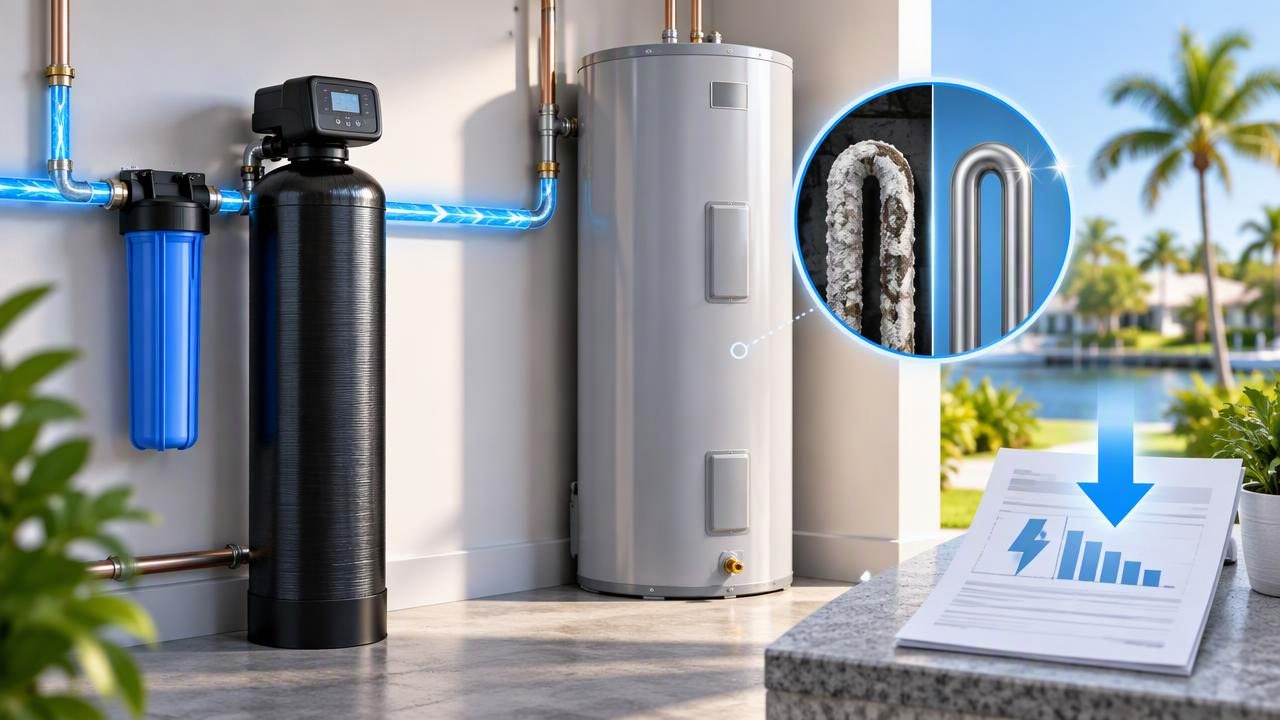
A point-of-entry water system treats water where it enters your home, before it flows to showers, sinks, laundry, and appliances. It is usually installed near the main water line and may include whole-house filtration, a water softener, or both. While these systems are not designed to cut electricity use directly, treating hard water can help some water-heating equipment operate more efficiently over time.
That distinction matters if you are researching saving electric bill with point of entry water system options. A filter alone is not an energy-saving device, and no system can promise a specific reduction in your utility bill. But where hard water is contributing to scale inside a water heater, an appropriate treatment system may help protect performance. The likely benefit depends on your water, equipment, household habits, and maintenance.
What Does a Point-of-Entry Water System Treat?
Point-of-entry, or POE, describes a system’s location and coverage—not a single treatment method. A whole-house sediment or carbon filter can reduce particles or certain tastes and odors. A softener reduces hardness minerals, typically calcium and magnesium, through ion exchange. Some homes combine treatment stages to address more than one water-quality concern.
POE treatment differs from point-of-use systems, such as an under-sink reverse osmosis unit, which treats water at one faucet. For a possible water-heater energy benefit, hardness control is usually the relevant feature. A standard whole-house carbon filter may improve water quality but does not necessarily remove hardness or prevent mineral scale.
How Hard Water May Affect Water-Heater Efficiency
When hard water is heated, some dissolved minerals can form scale. Deposits may collect on heating surfaces, in tanks, or in pipes and fixtures. Scale can reduce heat transfer or contribute to restricted flow, which may make certain equipment work harder to deliver hot water. The impact varies: a tank-style heater, tankless unit, electric element, and heat-pump water heater do not respond identically to water conditions.
In an electric tank heater, mineral buildup around a heating element can interfere with heat transfer. In a tankless heater, scale may accumulate in the heat exchanger and can affect flow or trigger maintenance needs. A softener can reduce incoming hardness and may limit new scale formation when correctly sized and maintained. It does not remove existing deposits from an appliance, and it cannot reverse damage already done.
Energy savings are therefore possible in some homes, but they are not automatic. If your water is already soft, your heater is new and clean, or most of your bill comes from cooling, lighting, or other appliances, a POE system may make little or no noticeable difference to electricity costs.
Which Water-System Features Could Help?
Match the treatment method to the problem. A softener is intended to reduce hardness; a sediment filter captures certain particles; and carbon media can reduce chlorine taste and odor, depending on the product and installation. A combined system may address several needs, but more treatment is not always better. Test first so you are not paying to solve a problem your home does not have.
- Water softener: Can reduce hardness minerals that contribute to scale in plumbing and water-heating equipment.
- Whole-house carbon filter: Can improve some aesthetic characteristics, such as chlorine taste or odor, but should not be assumed to soften water.
- Sediment filtration: Can help capture particles, especially where sediment is a known concern, but does not remove dissolved hardness.
- Point-of-use reverse osmosis: Can treat drinking water at a dedicated tap, but usually does not protect the whole-house water heater.
Some softeners use a small amount of electricity to run controls or initiate regeneration. Their operating costs may also include salt and regeneration water. Compare these expenses with the potential equipment-protection benefits rather than viewing treatment as a guaranteed bill-reduction tool.
South Florida Factors to Consider
Water conditions can vary by municipality, building, and private well. South Florida homeowners may notice mineral spots, soap that lathers poorly, or scale on fixtures, but those signs are not a substitute for testing. Public water reports provide useful background, while a sample from your own tap can help identify conditions at the home. Well owners should follow testing guidance appropriate to their water source and location.
Hardness is only one part of water quality. Depending on the source and plumbing, a household may also want to ask about chlorine, sediment, sulfur odors, lead risks, or PFAS. These concerns call for different testing and treatment approaches. A softener is not a general-purpose purifier, and a whole-house filter should not be selected based on a broad claim that it removes every contaminant.
Also consider local usage patterns. Frequent hot-water use, an older heater, high hardness, and visible scale may make preventive treatment more relevant. A home that uses little hot water or has no scale problem may see a smaller practical benefit.
Estimate the Payback Before You Buy
Start with a water test, your electric bills, and information about your water heater. Note the heater’s age, type, maintenance history, and any symptoms such as reduced hot-water flow or recurring scale. Ask a qualified water professional or plumber whether hardness is likely affecting the equipment and whether the proposed system is designed to address it.
Then compare the full cost of ownership with realistic benefits. Include equipment or lease payments, installation, salt or replacement filters, maintenance, and any water used during regeneration. Potential benefits may include reduced scale accumulation, fewer cleaning hassles, or better protection for some plumbing and appliances. Do not count a specific energy saving unless it can be supported by your conditions and a credible estimate.
A simple comparison can help organize the decision:
| Question | Why It Matters |
|---|---|
| Is the water hard? | Softening is most relevant when testing confirms elevated hardness. |
| Is the heater scaled or inefficient? | Existing problems may need service; a new treatment system alone may not fix them. |
| What will the system cost to run? | Factor in salt, filters, service, regeneration water, and any electricity. |
| What result is being promised? | Ask for evidence and avoid guaranteed savings claims that ignore your home’s usage. |
Ways to Reduce Electric Use Alongside Water Treatment
When your goal is a lower electric bill, combine water-quality decisions with proven household energy habits. Set the water heater to a safe, manufacturer-recommended temperature, repair hot-water leaks, and insulate accessible hot-water pipes where appropriate. Use cold water for laundry when suitable, install efficient showerheads, and avoid unnecessarily long showers. Have an aging or malfunctioning heater inspected before assuming that scale is the main cause of high energy use.
These steps address different parts of the problem. A softener may help manage hardness, while efficient appliances and thoughtful hot-water use can reduce demand. If air conditioning is the largest part of your South Florida electric bill, water treatment is unlikely to be the most effective place to look for major savings.
Maintenance Is Essential
A POE system only performs as intended when it is maintained according to its design and water conditions. Softener owners may need to keep the brine tank supplied with the recommended salt, check settings, and arrange periodic service. Filter cartridges and media require replacement or servicing on a schedule based on the manufacturer’s guidance, household usage, and incoming water quality.
Keep records of installation, test results, service visits, and filter changes. If water flow drops, taste or odor changes, or scale returns, do not assume the equipment is still working properly. A service check can identify exhausted media, incorrect settings, a bypassed system, or a treatment method that does not match the water.
Bottom Line: Can It Lower Your Electric Bill?
A point-of-entry system may help limit new scale and support water-heater performance when hard water is a documented concern. That can contribute to energy efficiency in some homes, but the result is conditional—not a guaranteed reduction in your monthly bill. A filter that does not address hardness may offer no water-heater energy benefit, and a treatment system cannot repair a heater that already needs maintenance.
For the best decision, test your water, identify the actual source of high energy use, and compare system costs with realistic benefits. South Florida homeowners can use the educational resources from Blog Water News as a starting point, then confirm recommendations with qualified local professionals.