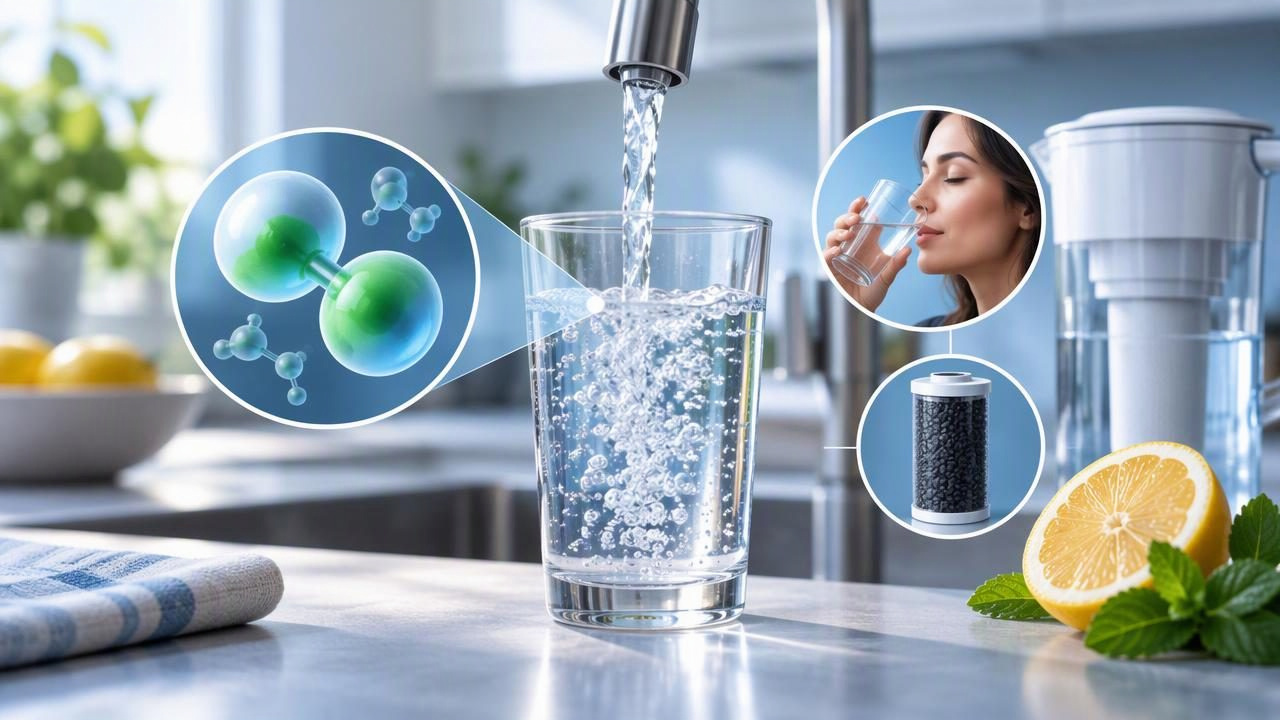
Chlorine is used to disinfect drinking water and help protect it from harmful germs as it travels through public water systems. That protection is important, but the noticeable swimming-pool taste or smell can leave people wondering whether chlorine in drinking water causes health effects. The answer depends on the amount, the type of exposure, and whether other substances are present.
For most households connected to a regulated public water supply, a chlorine taste or odor does not by itself mean the water is unsafe. Still, understanding how disinfection works, what health guidance says, and how to investigate changes in your water can help you make informed choices—especially in South Florida, where water sources and treatment practices vary by utility.
Why Is Chlorine Added to Drinking Water?
Water utilities use disinfectants to inactivate disease-causing organisms, including bacteria and viruses. Chlorine is popular because it works effectively and can remain in the water as it moves through pipes. This continuing protection, called a disinfectant residual, helps reduce the chance that water will become contaminated between the treatment plant and your tap.
Utilities carefully manage disinfectant levels and test water to meet applicable standards. In the United States, the Environmental Protection Agency sets a maximum residual disinfectant level (MRDL) of 4 milligrams per liter (mg/L) for chlorine, measured as chlorine. This is a regulatory limit—not a target for homeowners—and your local utility can provide information about its treatment and monitoring.
Chlorine can also be used in different forms, such as free chlorine or chloramine, a disinfectant made from chlorine and ammonia. These disinfectants do not behave identically, so a filter designed for one may not perform the same way with the other. Check your utility’s consumer confidence report or contact the provider to find out which disinfectant it uses.
Chlorine in Drinking Water: Health Effects to Understand
At levels permitted in public drinking water, chlorine is used to control microbial risks. For most people, the small residual used for disinfection is not expected to cause the same effects as exposure to concentrated chlorine gas or cleaning products. Those concentrated exposures are a different situation and can be dangerous; never mix household chemicals or use them to treat drinking water.
Some people notice the taste or smell more than others. A strong chlorine-like odor may make water less appealing, and some individuals report that it affects the taste of beverages or food. Sensitivity to odor does not establish that water is harmful, but a sudden or unusual change deserves a call to the water provider.
It is also important to distinguish chlorine itself from disinfection byproducts. When disinfectants react with naturally occurring organic matter in source water, compounds such as trihalomethanes (THMs) and haloacetic acids (HAAs) can form. Utilities monitor regulated byproducts and use treatment controls to manage them. Research has linked long-term exposure to some byproducts above regulated limits with potential health concerns, but a chlorine smell cannot tell you the level of THMs or HAAs in your water.
In other words, do not assume that removing all disinfectant is automatically safer. Disinfection helps protect against pathogens, while byproduct control and ongoing monitoring help manage other risks. If you have concerns about your water, use test results and information from the utility rather than relying on taste alone.
Why Can Tap Water Smell Strongly of Chlorine?
Chlorine levels can vary as utilities respond to water conditions, maintenance, or seasonal changes. The taste may also seem stronger in warm water, in water that has been sitting in household plumbing, or when a person is especially sensitive to odors. A change in plumbing or a nearby water main repair can also affect how water looks or smells temporarily.
If the odor is persistent, unusually strong, or accompanied by discoloration, particles, or an unexpected taste, contact your water utility. Ask whether there has been a treatment change or a service issue in your area. If you use a private well, public utility monitoring does not apply; arrange appropriate testing through a qualified laboratory and ask local health officials which tests are recommended.
How to Check Your Water Quality
Start with your utility’s annual consumer confidence report, also called a water quality report. It typically summarizes the source of the water, detected contaminants, and compliance with drinking water standards. Look for disinfectant type and reported levels, as well as regulated disinfection byproducts. If you cannot find the report online, request it from your provider.
When the question is about your tap rather than the distribution system, consider testing. Water can change as it passes through a building’s plumbing, and a utility report does not describe every home’s pipes. A certified laboratory can help select tests based on your concern, such as lead, metals, or other contaminants. Use a properly collected sample and follow the lab’s instructions; an at-home test strip may be useful for screening but does not replace laboratory analysis for many contaminants.
For South Florida residents, remember that water quality is not identical across every city or water district. Nearby communities may use different sources, treatment methods, and distribution systems. Check the report for your specific provider rather than assuming that a neighbor’s results describe your home.
Can a Water Filter Reduce Chlorine?
Many activated carbon filters can reduce chlorine taste and odor when they are properly matched to the water and maintained. They are available in pitcher, faucet-mounted, under-sink, and whole-house formats. A point-of-use filter treats water at one tap, while a whole-house system treats water entering the home. The best option depends on where you want treated water and what else you are trying to address.
Reverse osmosis (RO) systems commonly use a carbon prefilter along with a semipermeable membrane and additional stages. The carbon stage can help reduce chlorine, while the membrane is intended to reduce a range of dissolved substances. However, performance varies by model, installation, water conditions, and maintenance. An RO unit is not automatically necessary just because you detect chlorine taste.
Before buying, look for independent certification and check the exact performance claim for the specific model. NSF/ANSI 42 is commonly associated with aesthetic effects such as chlorine taste and odor; other standards apply to different contaminant claims. A certification for one reduction claim does not mean a device removes every contaminant. Confirm that the product addresses your concern and that replacement cartridges are readily available.
- Pitcher or faucet filter: A convenient way to treat water used for drinking and cooking, but capacity and flow are limited.
- Under-sink carbon filter: Provides filtered water at a dedicated tap and may offer greater capacity than a pitcher.
- Whole-house filtration: Treats water at the point of entry, which may be useful when the goal extends beyond drinking water.
- Reverse osmosis: A multi-stage option for specific dissolved-contaminant concerns; it requires periodic filter and membrane service.
Use Filters Safely and Maintain Them
A filter only works as intended when it is installed correctly and replaced on schedule. As a cartridge reaches capacity, its performance can decline. Follow the manufacturer’s instructions for replacement intervals, sanitation, and flushing a new cartridge. Some systems include an indicator, but the indicator may be based on time or estimated use rather than a direct measurement of water quality.
Do not leave filtered water sitting in a warm area for long periods. Keep pitchers clean, store them as directed, and avoid touching the outlet or filter with unwashed hands. If a system has been unused for an extended period, follow its restart instructions. If you are unsure whether a filter handles chlorine, chloramine, lead, or another specific concern, check the product documentation or contact the manufacturer.
It is equally important not to remove or bypass a disinfectant residual without understanding the consequences. A point-of-use filter treats a limited quantity of water and does not change the treatment approach for the entire public distribution system. For whole-house equipment, discuss your goals with a qualified water treatment professional and keep up with service.
Practical Steps for Homeowners
- Identify your water provider and disinfectant type using the latest water quality report.
- Notice whether the taste or smell is new, persistent, or limited to one tap.
- Contact the utility about sudden changes, repairs, or questions about reported results.
- Test water when you need information about a specific contaminant or household plumbing concern.
- Select a certified treatment system based on documented performance, then maintain it as directed.
If only one faucet has an unusual odor, the issue may be related to that fixture or its plumbing rather than the public supply. If all taps are affected, the utility may be able to confirm whether other customers have reported the same change. Either way, a quick investigation is more useful than guessing from smell alone.
The Bottom Line
Chlorine plays an important role in protecting public drinking water from germs. At regulated levels, its presence is not automatically a sign of a health hazard, and chlorine odor alone cannot reveal whether harmful contaminants or disinfection byproducts are present. Review your local water report, ask questions about unexpected changes, and arrange targeted testing when appropriate.
If chlorine taste or odor bothers you, a correctly selected and maintained carbon filter may improve it. Choose equipment based on verified reduction claims, not broad promises, and keep up with cartridge changes. For more guidance on water quality and treatment options for South Florida homes, readers can explore the educational resources from Blog Water News.