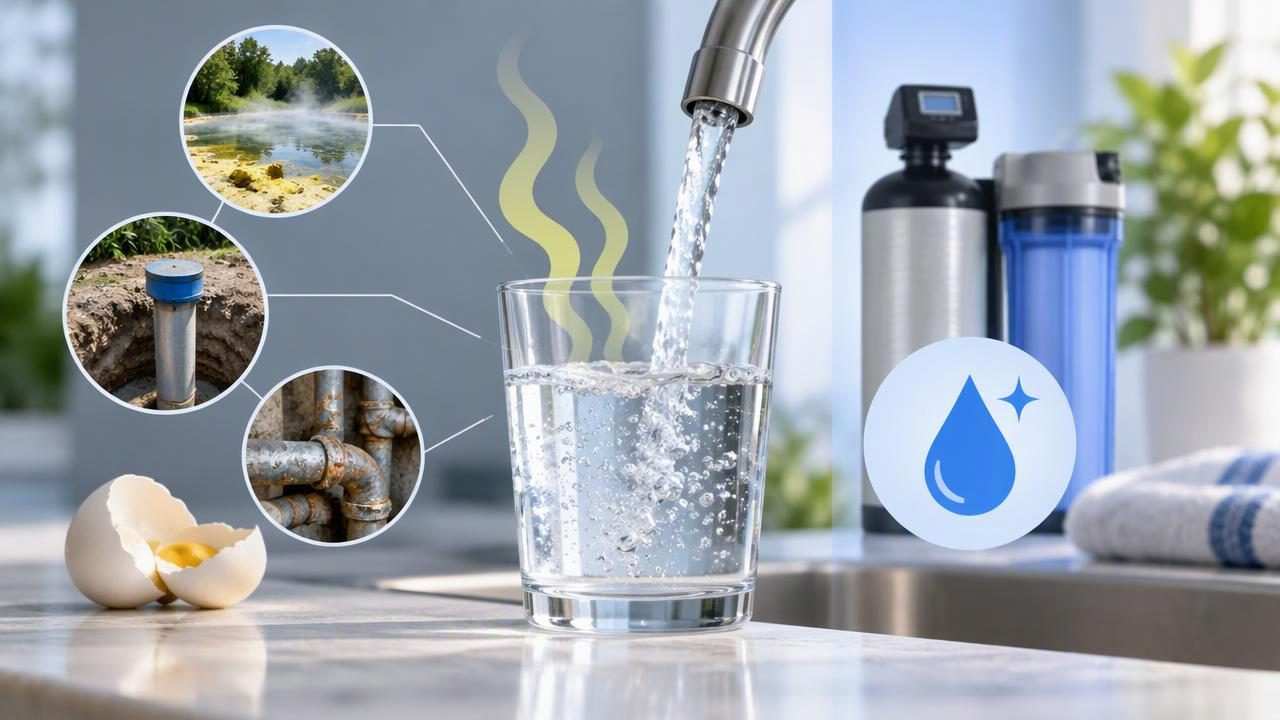
A sulfur smell in water—often compared to rotten eggs—is unpleasant, but it does not automatically mean your water is unsafe. The odor commonly comes from hydrogen sulfide gas, naturally occurring sulfur compounds, bacteria, or a reaction inside a water heater. In South Florida, the best solution depends on where the smell occurs, how long it has been present, and whether your home uses municipal water or a private well.
Before buying a filter or treating the water, narrow down the source. A simple comparison between hot and cold taps can provide a useful clue, while laboratory testing can identify what is actually in the water. This guide explains common sulfur smell in water causes and solutions, when to call a plumber or water professional, and how to choose treatment that addresses the source instead of masking the odor.
What Causes a Sulfur Smell in Water?
The rotten-egg odor is usually associated with hydrogen sulfide, a colorless gas that can dissolve in water. It may form naturally underground as water moves through rock and organic material, or it may be produced by bacteria in a well, plumbing, or water heater. The smell can be noticeable even when the concentration is low.
Other possibilities include sulfur-containing minerals or a chemical reaction between water and components in a plumbing system. Odor alone cannot confirm the exact cause, so treat it as a reason to investigate—not as a substitute for a water test.
1. Hydrogen sulfide in groundwater
Private wells can draw water that contains naturally occurring hydrogen sulfide. The odor may come from the tap throughout the house, and its intensity can change with water use, seasons, or well conditions. A well may also contain iron, manganese, or other minerals that affect color, taste, and treatment needs. Testing is important because a treatment system must be matched to the water’s full chemistry.
2. Sulfur bacteria in wells or plumbing
Sulfur-reducing bacteria can produce hydrogen sulfide as they use sulfur compounds. These bacteria may live in a well, water heater, or plumbing biofilm. They are not necessarily harmful themselves, but their presence can contribute to odor, slime, corrosion, or staining. A sudden change in smell after a well repair, plumbing work, or a long period of low water use deserves attention.
3. A water heater reaction
If the odor occurs only when you run hot water, the source may be the water heater rather than the incoming supply. In some tanks, bacteria interact with the anode rod, a component designed to help protect the tank from corrosion. This can produce a sulfur-like smell in hot water while cold water remains odor-free. A plumber can inspect the heater and recommend an appropriate fix; do not remove or replace the anode rod without understanding the effect on tank protection and warranty.
4. Drain or fixture odor mistaken for water odor
Sometimes the water itself is not the source. Bacteria and residue in a sink drain or overflow can release a similar smell, especially when warm water runs. Fill a clean glass with water and move away from the sink before smelling it. If the glass smells fresh but the sink area does not, clean the drain and overflow or have them inspected before investing in water treatment.
How to Pinpoint the Source
A few careful observations can help you decide what to test next. Run water briefly before collecting it, use a clean glass, and compare more than one fixture. Avoid relying on a single check if the odor is intermittent.
- Compare hot and cold water. If only hot water smells, ask a plumber to inspect the water heater. If both smell, look upstream at the supply, well, or plumbing.
- Check multiple taps. An odor at every faucet suggests a shared supply or plumbing issue. One affected fixture may point to a local drain, faucet, or branch line.
- Notice other signs. Black or orange staining, cloudy water, sediment, unusual taste, or recurring odor may help a qualified professional select the right tests.
- Record when it happens. Note whether the smell appears after water has been sitting, following maintenance, or only during certain times of day.
For private wells, testing should be performed by a qualified laboratory using the correct sample containers and instructions. Municipal customers can contact their water provider about water-quality reports, but a household test may still be useful if the odor appears only at one property or after water enters the building.
Is Sulfur-Smelling Water Dangerous?
A rotten-egg odor at typical levels is often more of a nuisance than an immediate health concern, but smell cannot establish whether water is safe to drink. Hydrogen sulfide can affect taste and odor, and elevated levels may cause other problems. More importantly, an unpleasant smell can occur alongside a separate contaminant that has no odor at all.
Do not use appearance or smell as your only safety check. If the odor is sudden, strong, persistent, or accompanied by illness, discoloration, or a change in water pressure, use a safe alternate water source for drinking and cooking while you seek advice. Contact your water provider if you are on municipal water, or arrange appropriate well testing if you have a private supply. If you suspect a gas leak or experience symptoms such as dizziness in an enclosed area, leave the area and contact emergency services; do not investigate a possible gas hazard yourself.
Sulfur Smell in Water: Solutions That Match the Cause
Effective treatment starts with diagnosis. A filter chosen without testing may reduce some odor while leaving its source—and other water-quality issues—untreated.
For a water heater problem
Have a licensed plumber inspect the tank, temperature settings, anode rod, and maintenance history. Depending on the heater and water conditions, the plumber may recommend flushing, disinfection, or a compatible replacement anode. Follow manufacturer guidance: altering a water heater incorrectly can reduce corrosion protection, create a scalding risk, or affect the warranty.
For a contaminated or odorous well
A well professional may recommend shock chlorination when testing and inspection indicate that disinfection is appropriate. This is not a permanent answer in every case, and repeated treatment without identifying the cause can lead to recurring odors. The well cap, casing, storage tank, and nearby plumbing should also be checked for entry points, buildup, or maintenance problems.
For hydrogen sulfide in the water supply
Treatment options can include activated carbon for low levels, oxidation followed by filtration for higher levels, or other treatment selected for the water chemistry. Aeration can also help remove dissolved gases in some systems. A point-of-entry system treats water entering the house, while a point-of-use system treats water at a specific tap. The right choice depends on test results, household use, and whether the issue affects all water or only drinking water.
Reverse osmosis may improve drinking-water taste and reduce certain dissolved substances at a dedicated faucet, but it is not automatically the best whole-house solution for a sulfur odor. It also produces reject water and requires filter and membrane maintenance. Ask a water-treatment professional to confirm that the proposed system is rated for the identified problem and that pretreatment is not needed.
Why a Water Softener May Not Solve the Odor
Water softeners are designed mainly to reduce hardness minerals such as calcium and magnesium. Hard water can contribute to scale on fixtures and appliances, but a standard softener is not a universal treatment for hydrogen sulfide, bacteria, or every sulfur compound. Some treatment systems combine technologies, but the design should be based on actual test results rather than a general promise to fix every water issue.
In South Florida, where water characteristics vary by location and supply, testing can help distinguish odor concerns from hard water, chlorine taste, iron staining, or other issues. Avoid selecting equipment solely because a neighbor has it; nearby homes can have different plumbing, well conditions, or treatment needs.
Testing and Maintenance: What Homeowners Should Know
Ask the laboratory or water professional which tests fit your source and symptoms. For a private well, a panel may include hydrogen sulfide or sulfur-related testing, bacteria, pH, hardness, iron, and manganese. The appropriate list depends on the well and local guidance. For a municipal connection, start by reporting the odor to the utility and ask whether nearby customers have reported similar changes.
Once treatment is installed, follow its maintenance plan. Replace cartridges on schedule, sanitize equipment when required, and keep records of service and water tests. A filter that is overdue for replacement may perform poorly or contribute to taste and odor complaints. For oxidation and filtration systems, maintenance may include checking media, pumps, injectors, and backwashing settings.
- Use the manufacturer’s service interval as a starting point, then adjust based on water use and test results.
- Keep the system’s model, installation date, filter changes, and test reports in one place.
- Retest after major plumbing or well work, a treatment change, or a return of the odor.
- Do not pour disinfectants into a well or treatment unit unless a qualified professional provides instructions.
When to Get Professional Help
Call a plumber if the smell is limited to hot water, appears at one fixture, or began after water-heater or plumbing work. Contact your water provider if multiple municipal customers are affected or if the odor started suddenly throughout the home. Private-well owners should arrange testing and well inspection when the smell persists, returns after treatment, or comes with staining or sediment.
Good diagnosis can prevent spending on a system that does not address the cause. A qualified water professional should explain the test results, identify the treatment target, describe ongoing maintenance, and clarify what the equipment does—and does not—remove. Blog Water News shares practical guidance to help households make informed decisions about water quality and treatment.
The Bottom Line
A sulfur smell in water can come from groundwater, sulfur-producing bacteria, a water heater, or even a drain that only seems to affect the water. Compare hot and cold taps, check more than one fixture, and arrange testing when the odor persists. Once the cause is known, targeted plumbing repairs, well disinfection, or a properly selected filtration or oxidation system can help restore better-smelling water without relying on guesswork.