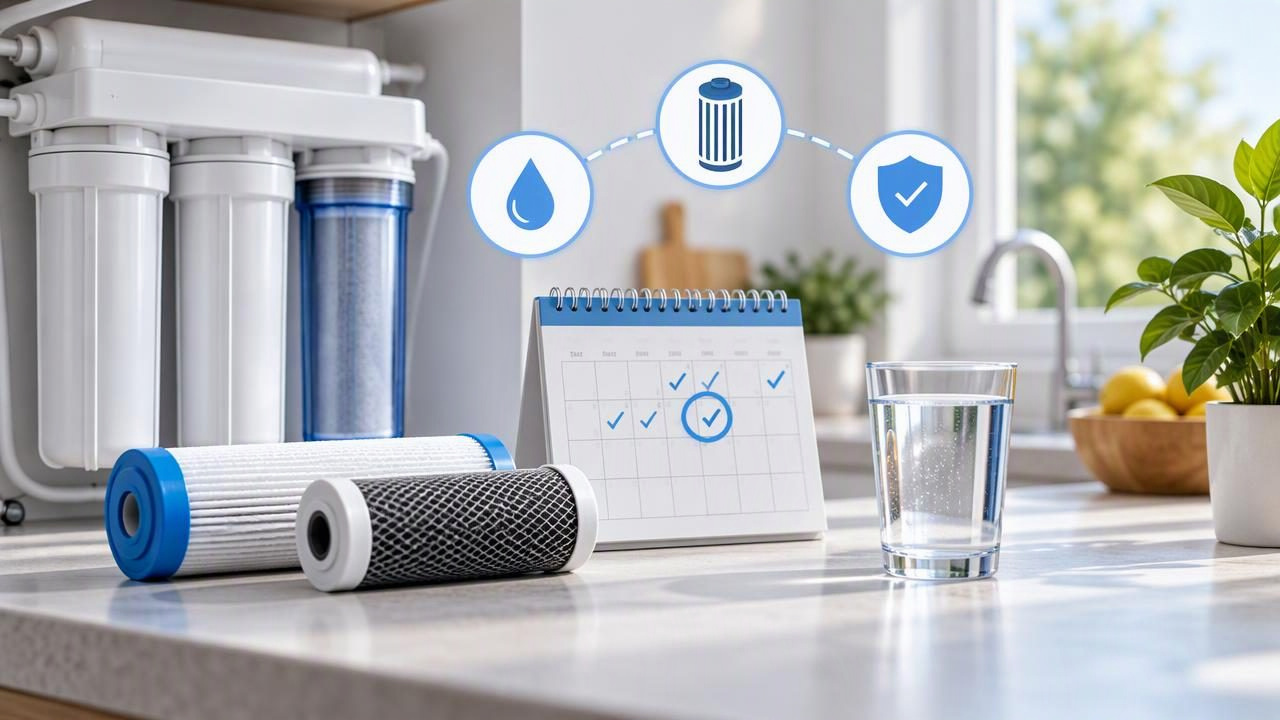
A water filter can only do its job when its media is in good condition. As a cartridge collects sediment, chlorine, or other substances, its capacity gradually decreases. Wait too long to replace it and water may taste or smell different, flow may slow, or the system may no longer perform as intended.
This water filter replacement schedule guide explains common replacement intervals, the warning signs to watch for, and how to make a practical plan for your home. Because systems and water supplies differ, use these timeframes as a starting point—not a substitute for the manufacturer’s instructions or water testing.
Why water filter replacement matters
Every filter has a limited capacity. A sediment cartridge traps particles; activated carbon reduces chlorine, tastes, and odors; and a reverse osmosis (RO) membrane separates many dissolved substances from water. Once a component reaches its rated capacity, it may become less effective. A clogged filter can also restrict flow and place extra strain on equipment.
Replacement timing depends on more than the number of people in a household. It can vary with daily water use, incoming water quality, the filter’s size and design, and whether the system treats drinking water or the entire home. In South Florida, mineral content, sediment, disinfectants, and individual water sources can all affect how quickly a filter needs attention.
Changing cartridges on time helps protect water quality and system performance. It also makes maintenance more predictable: planned replacement is usually easier than troubleshooting an unexpected drop in water pressure or an unpleasant taste.
Typical replacement intervals by filter type
The table below offers general ranges for residential systems. Always check the product manual or cartridge label first. Some filters are rated by time, gallons, or both; replace them when they reach whichever limit comes first.
| Filter or component | Common starting interval | What to check |
|---|---|---|
| Sediment pre-filter | Every 3–6 months | Visible discoloration, pressure loss, and the rated capacity |
| Carbon block or granular carbon | Every 6–12 months | Manufacturer rating, chlorine taste or odor, and water use |
| Under-sink drinking-water cartridge | Every 6–12 months | Cartridge capacity and any built-in indicator |
| Reverse osmosis membrane | About every 2–5 years | Water quality, production rate, and system test results |
| Whole-house filter cartridge | Often every 3–12 months | Filter type, household demand, and pressure change |
| Refrigerator water filter | Often every 6 months | Appliance guidance, water use, and filter light |
These ranges are not universal. A high-capacity whole-house tank may use replaceable media on a different schedule from a cartridge filter. A water softener also has its own maintenance needs, such as checking salt and system settings; it is not a drinking-water filter and does not replace one.
Signs a filter may need replacement sooner
A calendar reminder is helpful, but it cannot account for every change in water use or quality. Check your system periodically and pay attention to changes such as:
- Slower flow: A clogged cartridge can reduce water pressure at a filtered tap or throughout a home, depending on the system.
- Changed taste or smell: A return of chlorine taste, earthy notes, or another familiar odor may indicate that a filter is due. It is not a reliable test of safety, however.
- Cloudiness or visible particles: These can have several causes. Do not assume a new filter is the only solution; investigate the source.
- A service or filter light: Treat the indicator as a reminder and confirm the model’s instructions, since some lights are time-based rather than quality sensors.
- Unusual system behavior: Leaks, repeated alarms, or a sudden drop in RO production call for troubleshooting, not just an automatic cartridge swap.
Do not wait for a warning sign if a cartridge has reached its stated gallon limit or replacement date. Some contaminants have no taste, smell, or visible clues. A water test—not appearance—is the way to assess particular water-quality concerns.
How water quality and household use affect timing
Two homes with identical equipment may need different replacement schedules. A large family that fills bottles and cooks at home may use a drinking-water cartridge faster than a couple who use it occasionally. Sediment can shorten the life of a downstream carbon filter, while changes in a private well or municipal supply can affect performance too.
For South Florida homeowners, the right maintenance plan starts with understanding the source and the system. Municipal water and private well water can have different characteristics, and conditions can vary by location. If you have concerns about chlorine, lead, PFAS, sulfur, or other specific contaminants, ask a qualified professional about suitable testing. A general-purpose filter does not necessarily reduce every contaminant.
Choose equipment certified or independently tested for the reduction claims that matter to you, and check that the exact cartridge is compatible with the system. Certification, such as an applicable NSF/ANSI standard, relates to specific claims; it does not mean a product removes every substance.
Build a simple water filter maintenance calendar
A clear record makes it easier to stay on schedule, especially when a home has several filters. Use these steps to set up a routine:
- Record each component. Write down the system and cartridge model, installation date, and rated capacity.
- Set two reminders. Add a calendar alert before the expected replacement date and another on the due date. Include gallon limits if your system tracks usage.
- Check the manual. Note any flushing, sanitation, or reset instructions required after a change.
- Inspect periodically. Look for leaks and changes in flow, and confirm that connections and indicators appear normal.
- Update the record. After replacement, note the date, cartridge, and any maintenance completed.
A simple log can be kept on paper or in a phone reminder. For example: “Kitchen carbon cartridge—installed March 1; rated for six months or 500 gallons; check and replace by September 1, whichever comes first.” Use the actual rating for your product rather than copying this sample interval.
Replacing a cartridge safely
Many point-of-use cartridges are designed for homeowner replacement, but procedures differ. Read the instructions before turning off valves or removing a housing. Use the correct replacement part, protect the area from drips, and follow the specified flushing procedure. If the system requires sanitizing, do not skip that step.
After installation, check carefully for leaks and run water as directed before drinking it. Some cartridges release harmless carbon fines during initial flushing, but follow the manufacturer’s guidance. If you cannot close a valve, see damaged fittings, or are unsure how to service a pressurized unit, contact a qualified technician.
Keep replacement dates and receipts. That record can help identify recurring issues, confirm warranty requirements, and make it easier for a service professional to understand the system’s history.
Common maintenance mistakes to avoid
- Using taste as the only measure: Water can taste normal even when a particular filter is overdue or a contaminant is present.
- Assuming every cartridge lasts a year: Ratings differ, and a busy household may reach a gallon limit well before the calendar date.
- Replacing only the easiest component: Multi-stage systems may need several cartridges changed at different intervals. Follow the full maintenance plan.
- Choosing a generic part without checking compatibility: An incorrect cartridge may not seal correctly or deliver the intended performance.
- Ignoring the cause of repeated clogging: Frequent sediment-filter changes may point to an upstream issue that deserves investigation.
Keeping spare cartridges can prevent a delay, but store them as directed and verify the model before ordering. Buying a compatible filter with the right performance claims is more important than choosing solely by price.
Frequently asked questions
Can I keep using a filter after its replacement date?
It is best to follow the manufacturer’s time or gallon limit. Continuing beyond the rated capacity can reduce performance, and the degree of change may not be obvious. If you have missed a replacement date, install the correct cartridge and follow the system’s flushing instructions.
Does a water filter remove hard water minerals?
Most standard carbon cartridges do not soften water. A water softener is designed to address hardness minerals, while an RO system may reduce many dissolved substances at a dedicated drinking-water tap. Select treatment based on testing and the problem you are addressing.
How do I know which filter schedule is right for my home?
Start with the system manual and cartridge rating, then consider household use and water conditions. If you are unsure what a filter is designed to reduce or why it is clogging quickly, consult the manufacturer, a water-treatment professional, or a qualified testing service.
Make maintenance part of your water plan
The best water filter replacement schedule is one matched to your equipment, water use, and local conditions. Follow cartridge ratings, watch for performance changes, and test water when you need answers about specific contaminants. A consistent record can help your system deliver dependable performance without replacing parts too early—or forgetting them for too long.
For more practical water-quality guidance for South Florida homes and businesses, explore the resources from Blog Water News.