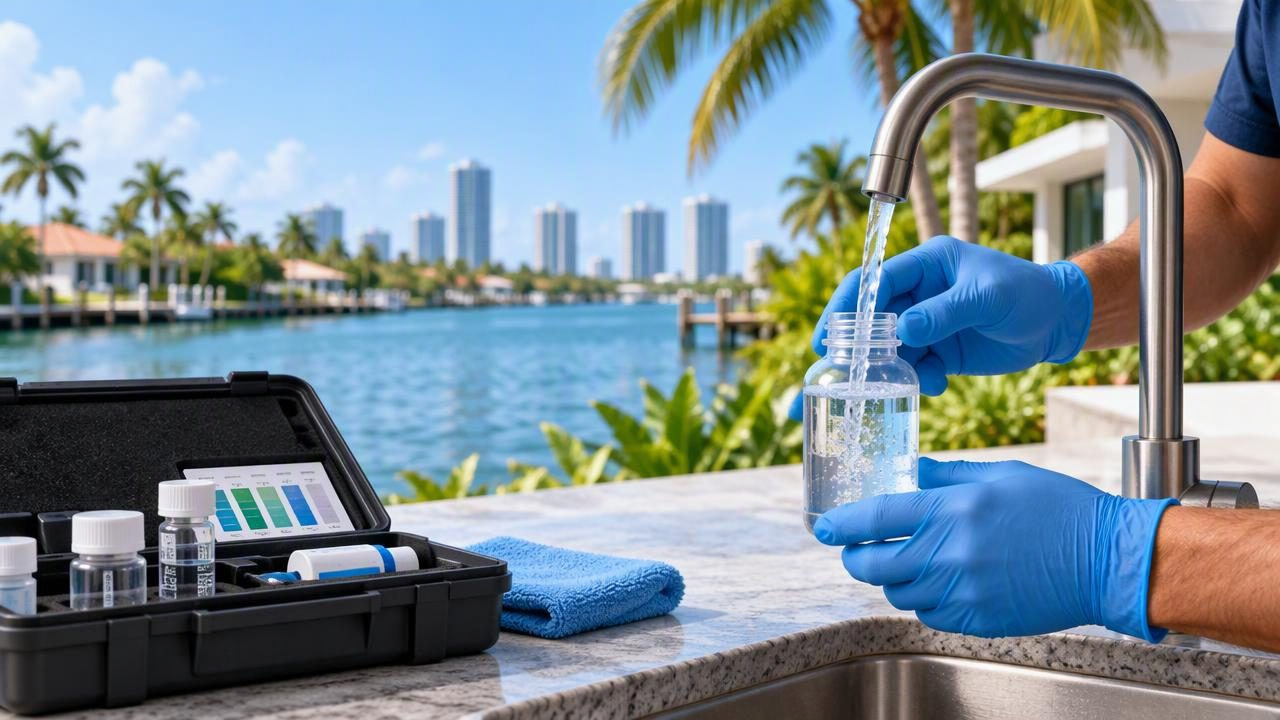
If you have noticed an unusual taste, cloudy water, scale on faucets, or a change in your water supply, it may be time to look for water quality testing near me. Testing can help identify what is in your water and whether the concern is related to your utility’s supply, household plumbing, or a private well.
In South Florida, water characteristics can vary by municipality, building, and source. A neighbor’s test results may not reflect what comes out of your tap, especially if homes have different plumbing or treatment equipment. The most useful first step is to match the test to your concern, collect the sample correctly, and understand what the results do—and do not—mean.
Why test your water in South Florida?
Public water systems are required to monitor water and provide consumer information, but that does not answer every question about water at a particular faucet. Water may change as it travels through service lines, premise plumbing, a softener, or a filter. Private wells are not regulated and monitored in the same way as public supplies, so well owners should arrange appropriate testing themselves.
Common reasons to test include a new home purchase, a change in taste or odor, plumbing work, a private well, or concerns about a particular contaminant. Testing can also establish a baseline before installing treatment equipment. Rather than buying a device based on a general claim, use results to determine whether treatment is needed and what it should address.
- Chlorine: Disinfection can leave a noticeable taste or smell. A test can help assess chlorine levels and guide choices such as activated carbon filtration.
- Hardness: Calcium and magnesium can contribute to scale, spots, stiff laundry, and reduced efficiency in water-using appliances. Hardness is primarily an aesthetic and operational concern, not a measure of overall safety.
- Lead: Lead can enter water from certain plumbing materials, fixtures, or service lines. The amount can vary between buildings and even between taps.
- PFAS: These chemicals require specialized laboratory analysis. A basic home test or general water panel may not include them.
- Sulfur compounds: A rotten-egg odor may be associated with hydrogen sulfide, but odor alone cannot confirm its cause or concentration.
What does water quality testing near me include?
There is no single test that checks for every possible substance. A basic screening panel may cover common physical or chemical characteristics, while a targeted analysis looks for specific contaminants. Ask the testing provider exactly which substances are included, the laboratory’s detection limits, and whether the lab is accredited for the analyses you need.
| Concern | Possible test | What to know |
|---|---|---|
| Scale or spots | Hardness, sometimes alkalinity | Useful for evaluating scaling and softening needs. |
| Chlorine taste | Free or total chlorine | Results depend on sampling conditions and timing. |
| Lead concern | Lead analysis of a properly collected tap sample | Sampling instructions matter; first-draw and flushed samples answer different questions. |
| PFAS concern | Targeted PFAS laboratory panel | Confirm which compounds are tested and the reporting limits. |
| Well-water concerns | Panel based on local conditions and intended use | Discuss bacteria, nitrate, and other relevant parameters with a qualified professional or health department. |
A home test strip can provide a quick indication of selected properties, such as hardness or pH, but it is not a substitute for laboratory testing when accuracy or health-related decisions matter. Likewise, a water test should not be treated as a medical diagnosis. If you have a health concern, consult a healthcare professional and the appropriate public health agency.
How to find a reliable local water tester
When comparing search results for water quality testing near me, look beyond convenience and price. A trustworthy provider should explain the process before collecting a sample and give you a written report you can understand. If a company sells treatment equipment, ask whether you can receive test results and recommendations without being pressured to purchase a particular system.
- Confirm the laboratory credentials. Ask whether the lab is certified or accredited for the specific tests requested. Accreditation for one analysis does not automatically mean it is accredited for every contaminant.
- Describe the source and concern. Tell the provider whether you use municipal water or a private well, which faucet you want tested, and what you have noticed. Mention recent plumbing work or existing filtration equipment.
- Request a clear scope and price. Get the analytes, sample collection method, turnaround time, and total cost in writing. Avoid assuming a package includes lead, PFAS, bacteria, or other specialized tests unless they are listed.
- Follow the collection instructions exactly. Some tests require a sterile bottle, a specific flushing period, or a first-draw sample. Do not rinse containers or change the sampling routine unless instructions say to.
- Ask how results will be explained. Look for units, detection limits, and a comparison standard or reference point. A useful report explains uncertainty and next steps rather than relying on alarming language.
Your water utility’s annual consumer confidence report can be a helpful starting point for public-system information. It describes monitoring results for the system, not necessarily a test of your kitchen tap. Contact the utility for current reports, and use a properly collected household sample if you need to investigate conditions inside your home.
How to understand your water test results
Read the analyte name, result, units, and reporting limit together. For example, a result reported as not detected means the substance was not measured above that method’s detection limit; it does not always mean the substance is completely absent. Compare results with the correct benchmark for the contaminant and intended use. Regulatory limits, health advisories, and aesthetic guidelines serve different purposes, so they should not be treated as interchangeable.
For lead, the sample method is especially important. A first-draw sample may help assess water that has been sitting in plumbing, while a flushed sample reflects different conditions. Follow the laboratory’s protocol and consider testing more than one tap if the concern involves several fixtures. If results indicate a potential issue, contact your water provider or local health department for guidance and arrange confirmatory testing when recommended.
For PFAS or other specialized contaminants, check which individual compounds the lab measured and the method’s reporting limits. “PFAS tested” can describe panels with different coverage. For hardness, chlorine, or sulfur-related concerns, results can help identify a treatment approach, but taste and odor alone are not reliable measures of safety.
What to do after testing
Use the report to decide on a practical next step, not to buy the broadest system available. If the issue is scale, a water softener may help protect plumbing and appliances, but it does not remove every contaminant. If the concern is taste or chlorine, an appropriately certified activated carbon filter may be suitable. Reverse osmosis can reduce a range of dissolved substances at a drinking-water tap, depending on the system and its verified performance. No single treatment method removes everything.
Check product claims against independent certifications and the specific reduction claim for the substance in your report. Installation, filter replacement, and maintenance affect performance. Keep records of test results and service dates, and retest when a professional recommends it, after a relevant change, or if the original concern returns. For private wells, ask local authorities or a qualified water professional how often to test based on the well and local conditions.
If a result is unexpected, verify that the sample was collected and handled correctly before making major decisions. Contact the lab to discuss the report and whether a repeat or confirmatory sample is appropriate. For suspected immediate hazards, follow guidance from the water utility or public health authorities while you investigate.
Make testing part of a smarter water plan
Local water testing is most valuable when it answers a specific question. Start with the source of your water and the symptoms or concerns you want to investigate. Then select a test with a clear scope, use a qualified laboratory, and interpret the findings in context. That process can help South Florida homeowners distinguish hard water and taste issues from questions that need specialized analysis—and choose treatment based on evidence rather than guesswork.
For more practical information on water quality, filtration, and maintenance, explore the guides published by Blog Water News.